
Building trust or being polite?
Have you ever had a conversation or meeting with someone more senior where you’ve been honest, and they have appeared supportive and understanding, only for you to discover later that they have said something completely different to your manager?
You’re not alone.
There is something uncomfortable about discovering that what you thought was a confidential or supportive conversation was not quite what you understood it to be. The next time you speak to that person, you are still polite. You may still engage with them professionally, but you probably won’t be quite as honest and open.
That is the difference between being polite and building trust.
Politeness can make an interaction feel positive in the moment. Trust is built through what happens afterwards. It develops through repeated experiences and through the confidence that what you say, what you are told and what happens next will be consistent.
That distinction matters beyond individual relationships. It can influence how people experience organisations, how they interpret leadership behaviour and how credible they believe the organisation’s messages to be.
Trust isn’t created by saying the right thing
Organisations spend considerable time defining what they stand for. Values, purpose, behaviours, pillars, employee value propositions and employer brands all have a role to play; however, none of them creates trust on their own.
People experience those messages through behaviour and signals.
A value might say “we listen”, but what happens when someone disagrees with a senior leader?
An organisation might say it encourages people to speak openly, but what happens when someone makes a mistake?
A manager might tell someone that their development matters, but are they given the opportunity to demonstrate that potential?
These moments are where organisational language becomes part of the evidence. I think this is where trust becomes particularly interesting.
Trust is not about whether I like you; it is about whether I can predict, with some confidence, what will happen if I am honest with you.
If I raise a concern, will it be heard?
If I challenge something, will I be supported or remembered for the challenge?
If I admit that I have made a mistake, will that become part of how I am perceived?
The answer to these questions can become more influential than the original conversation.
The signals we don’t always notice
Much of my research has explored ways in which people interpret organisations through the signals they receive.
People do not experience an organisation as a collection of statements on a website. They experience it through conversations, decisions, behaviours, relationships and moments that matter.
Some of those moments can reinforce what people have been told. While others create a contradiction.
A manager may tell someone that their contribution is valued, while the opportunities they receive suggest otherwise. An organisation may talk about inclusion, while everyday behaviour leaves people questioning whether they can genuinely belong. A company may promote openness, while people learn that challenging the status quo comes with consequences. Those experiences can speak volumes. It tells people whether their contribution is recognised, whether they belong, whether it feels safe to speak and whether the organisation is likely to do what it says it will do.
They also influence how people interpret the next experience.
The Trust Loop
We rarely experience these stages consciously.
Unless you consider yourself an overthinker, you probably do not walk away from a conversation thinking - That interaction has provided me with a negative signal, which has reduced my level of trust, and therefore I will modify my future behaviour.
But something does change. People might:
Become more careful about what they share
Stop challenging ideas in the same way
Think twice before asking for help
Become more anxious before the next meeting with that person
Continue to be polite, while becoming less open
The interaction itself has ended, but the signal remains. That signal can influence what happens next.
Experience - Signal - Trust - Behaviour - New Experience
The loop can work positively too. When what happens next is consistent with what people were told, confidence increases. When people experience that they can speak openly, ask questions, make mistakes and challenge ideas without being punished for doing so, trust has something to build on.
Trust therefore becomes less about one conversation and more about what happens repeatedly afterwards.
When trust becomes the risk
This is where trust connects with another part of my research. When we do not know how an organisation or individual will respond, the perceived risk of being open increases. And when risks increase, behaviour can change, and people will choose self-preservation. They may also hold back information, stop contributing to ideas, become less visible or reduce their willingness to advocate for the organisation.
This doesn’t happen because someone consciously decided to disengage. It can begin with something much smaller:
A conversation that did not feel quite right.
A promise that was not followed through.
An opportunity that went elsewhere without explanation.
A challenge that was remembered for the wrong reason.
One experience may not be enough to change someone’s relationship with an organisation. Repeated experience can be different. Eventually, a person may begin to consider whether the relationship, the team or the organisation is somewhere they still want to invest their time, energy and credibility.
What does this mean for Talent Attraction and Employer Brand Leaders?
My MSc research explored employer brand and talent attraction within professional services and considered the perspectives of recruiters working within the environment. One of the themes emerging from the research was the challenge of creating and maintaining a credible employer brand.
Notably, the most frequently cited barrier to maintaining a strong EVP was the lack of a clear EVP (Figure 1), suggesting clarity of messaging is underdeveloped. This is particularly significant as only 30% of survey participants indicated their organisation’s employer branding strategies were reviewed on an annual basis, whereas a higher concentration of participants indicated they were unsure when strategies were reviewed or were rarely reviewed (Figure 2).
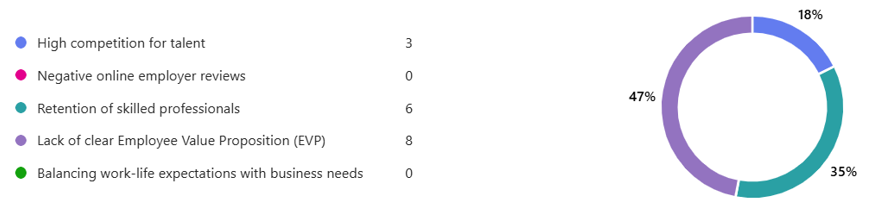
Figure 1: Survey Results - What is the biggest challenge in maintaining a strong EVP in professional services?

Figure 2 - Survey Results - How often does your company update or refine its employer branding strategies?
At face value, this could be interpreted as a messaging problem; perhaps the EVP needs to be clearer, employer brand activity needs to be reviewed more frequently, or internal communications need to improve.
These things may all have value, but I think there is another question worth asking: What happens when people understand the message but do not experience it?
An organisation can tell employees what its values are. It can tell candidates what it is like to work there. It can create compelling stories and engage employees to share experiences. But if the experience does not support the brand identity, credibility can become a challenge to maintain.
When the message and the experience contradict each other, which signal do people trust? The message? Or their own experience?
The war for talent changed the conversation
There is a wider context here too. The language of the “war for talent” encouraged organisations to think differently about how they attract and retain talent. Employer brand developed partly in response to that challenge, giving organisations a way to communicate why someone should work for them.
That thinking remains relevant; however, the environment has changed. People have access to more information about organisations than the employer brand team controls. They can see how leaders communicate publicly. They can read employee reviews on Glassdoor, Indeed or Reddit. They can observe how organisations respond to difficult issues. They can see how colleagues engage with company content on LinkedIn and what they choose to say themselves.
The employer brand is therefore not confined to what an organisation publishes; it exists alongside what people experience and what they are willing to say about the experience.
That raises the question I think employer brand and talent attraction leaders should consider carefully: Have we given people enough reason to put their own credibility behind us?
So are we building trust or being polite?
Perhaps this is the question organisations should ask more.
Not: Do our employees know our values, mission statement, purpose, employer brand or corporate brand?
The expectation is that they do.
Instead:
Do our employees feel able to speak openly?
Are people willing to advocate for the organisation and for each other?
Have we given them enough reason to put their own credibility behind us?
Trust is not created through a values statement, and it can’t be manufactured through employee advocacy programmes. It is built through repeated interactions where what happened next is consistent with what happened before.
Perhaps the strongest employer brand is not the most compelling story or the right channel to tell it on; perhaps it is the one where employees don’t need to be given a story to tell; instead, they are trusted to tell the truth about their experience.
The risk calculation behind career moves
When someone starts evaluating and weighing up considerations such as roles, compensation and overall opportunity, their choices become more complex.
In one of my previous articles, I explored how identity shapes the way people interpret signals, experience recognition and feel a sense of belonging within an organisation. These same factors also underpin how individuals perceive and navigate the risks associated with a potential move.
Career risk is multidimensional, encompassing psychological, social, professional and timing considerations.
Understanding the dimensions of career risk
Identity risk reflects the alignment between a role and an individual's values and aspirations. Social identity (Tajfel and Turner, 1979), as explored in my previous article, shows that individuals seek environments where they can be themselves, reinforced by social groups.
Social risk arises from the expectations and perceptions of peers, family and mentors. Sociocultural theory (Vygotsky, 1978) emphasises that thinking and decision-making are influenced by social interactions and cultural context. My MSc research touched on the cultural aspect that influences talent attraction and how social influence impacts how they respond to employer brands.
Professional risk encompasses uncertainty about growth, reputation and career trajectory. Behavioural research in decision-making suggests that perceived professional risk can delay action, prompting individuals to favour familiar options.
Timing risk is equally influential when considering a career move. Where someone is in their life and experience all affect whether an individual feels ready to consider a move. Timing alongside identity, social expectations and perceived opportunity can influence how someone evaluates an opportunity. Therefore, circumstance and timing mean that an opportunity can be evaluated differently.
Signals and organisational behaviour
In contemporary talent conversations, phenomena such as quiet quitting and quiet firing highlight the consequences of risk perception.
In 2025, quiet quitting became one of the most spoken-about topics sweeping across workplaces. It was a psychological shift in which individuals felt disengaged from going "above and beyond" after doing so for long periods of time, thus raising expectations when, in reality, they weren't being recognised for their efforts. When day-to-day interactions fail to convey value, recognition and advocacy, individuals may consciously reduce investment to protect themselves. This is, at its core, a self-preservation tool individuals may use to protect their well-being.
Quiet firing, on the other hand, reflects the signals an organisation communicates, whether intentionally or not, about diminished value, opportunity and support. These sometimes subtle behaviours create risk where employees sense their contributions are not fully recognised or understood, increasing openness to external opportunities even before a formal decision to leave arises.
Both behaviours demonstrate that risk is not a theoretical concept; it manifests in ways individuals engage with their work environment. Importantly, these signals intersect with identity, reinforcing an individual's sense of belonging, recognition and alignment with organisational values.
Implications for talent acquisition and employer brand
Talent acquisition teams play a role in shaping the perceived risk of career moves. The signals conveyed throughout the candidate experience, from role clarity through to employer brand messaging and organisational culture, all inform whether a potential opportunity feels aligned with identity and personal growth.
Understanding career risk requires looking beyond the immediate opportunity. Talent acquisition and employer brand leaders need to account for:
How identity alignment is conveyed through messaging, employee stories and organisational culture
How social and professional risks are reduced by clarity, advocacy and recognition
How timing influences readiness to engage, and the window during which perceived risk is most critical
In recognising and addressing these dimensions, organisations can attract talent more effectively and reduce disengagement and quiet quitting.
The hidden layer in career decisions
When someone evaluates a role, they’re rarely weighing only salary, responsibilities or brand reputation. They’re also considering lifestyle implications, external influences and social identity. These include
Commute or relocation
Flexibility
Work-life balance and impact on family routines
How the role reflects who they are
Whether the organisation fits with their self-image
Partner or family opinion and peer expectations
Cultural norms about success and stability
These create psychological weight about a decision they need to make. In other words, career decisions are not made in isolation.
Career decisions are often framed as rational choices, but in reality they are socially negotiated and identity-driven. People interpret opportunities through the lens of the impact it has on their lives and also how the decision will be perceived.
Erving Goffman, sociologist and psychologist, argued that people perform identity through what he called front-stage behaviour, the curated version of ourselves we present to the world. These are said to be supported by props such as job titles, employers and achievements. People don’t just pick a job; they pick an identity they have to perform for their audiences, partners, family, peers and mentors.
An example of this might be someone moving from a large global brand to a lesser-known organisation. Even if the role is considered more appealing, the decision may feel riskier because the social signal attached to the employer changes.
The talent decision loop
People rarely move jobs for the opportunity alone; it is usually triggered by circumstances, and the decision is usually much more complex.
Trigger - dissatisfaction, curiosity, or a new opportunity
Exploration - browsing roles, interpreting signals
Social reflection - talking with partners, family, friends or mentors
Identity alignment - does this role fit with who I want to become
Decision - stay, explore or change path
Influence can either be detrimental or motivational, and people may move between the stages throughout their career or before they explore what’s next. It’s rarely linear.
The full article is available on my personal LinkedIn page: The hidden layer in career decisions | LinkedIn
Identity, the lens through which decisions are made
When someone considers a career move, it could be assumed that their decisions are primarily influenced by opportunity.
While opportunity, progression and organisational reputation play a role, it does not fully explain how or why individuals choose to move. Career decisions develop over time through a combination of experiences, perception and influence, with identity acting as a central lens through which these decisions are interpreted. In this sense, identity does not simply influence decisions; it determines how other factors are prioritised and understood.
Social and Cultural Influence
Career decisions are influenced by a range of factors such as belonging and recognition, both of which contribute to how individuals experience their work environment. While personal circumstances, such as lifestyle, family and individual aspirations, form part of this process, there are also broader social dimensions that inform how decisions are made and understood.
Sociocultural theory, developed by Lev Vygotsky (1978), provides a useful lens through which to understand this dynamic, suggesting that decision-making is shaped by social interaction and cultural context. The theory emphasises that cognitive functions are formed through our interactions with others, indicating that individuals are not only reflecting on their own preferences when considering new opportunities; they are also consciously and unconsciously influenced by the expectations, opinions and experiences of those around them.
This creates a dynamic where individuals are considering whether the role is right for them and also whether it aligns with how they see themselves and how they expect to be seen by others.
This perspective connects how individuals associate themselves with their employer and is the connection to employer brand and organisational reputation, as highlighted by Backhaus and Tikoo (2004). When individuals recognise positive aspects of an employer’s image, they are more likely to associate themselves with that organisation, reinforcing the link between external perception and identity.
Identity and organisational fit
Identity becomes more explicit when considered through the lens of social identity theory, developed by Tajfel and Turner (1979). It is suggested that individuals define themselves, in part, through their membership of social groups, with these affiliations shaping both self-perception and behaviour.
Within organisational contexts, this is closely linked to the concept of organisational fit. Individuals are often drawn to organisations that reflect their values, beliefs and sense of identity, aligning with the research by Ostroff and Judge (2007), which highlights the importance of perceived alignment between individual and organisational characteristics. However, this alignment is not assessed solely through formal information such as job descriptions or EVP; it is interpreted through signals, many of which are experienced indirectly over time.
Organisations, therefore, need to consider how identity is represented through the attraction process. Highlighting affinity or employer network groups, alongside employee stories, can reinforce inclusion and shared experience, supporting individuals in recognising aspects of their own identity within the organisation (Stroud, 2023).
Read more about social identity theory here.
Implications for career decisions
While identity influences decision-making, it is shaped and reinforced through signals.
Leadership behaviour, employee experiences and day-to-day interactions all contribute to how an individual interprets their environment. These experiences influence how individuals feel at work and how they position themselves.
Where signals consistently reinforce alignment, individuals are more likely to experience connection and a sense of belonging. However, where there is inconsistency or where experiences challenge how individuals see themselves, this can influence decision-making over time.
In these instances, openness to new opportunities may increase.
Belonging: the hidden signal behind retention
Feeling like you belong within an organisation is a powerful motivator. When the feeling is absent, it can significantly affect work and well-being. People don't always realise the influence it has until its absence becomes difficult to ignore.
Research by Malone et al (2012) suggests that the motivation to belong is central to human existence and culture.
Despite its importance, many people struggle to feel a sense of belonging at work.
Psychologist Abraham Maslow highlighted the importance of belonging through Maslow's Hierarchy of Needs, where belonging sits at the centre of human needs. When belonging is absent, it often signals that something is not aligned with a person's needs.
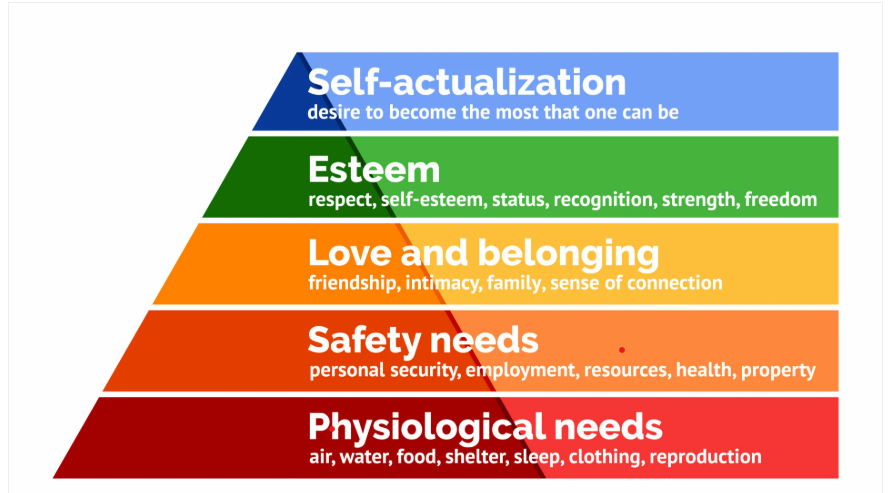
Photo credit: Maslow's Hierachy of Needs (Evans, 2026)
A sense of belonging
Belonging shows up through questions that sit beneath the surface; these can look like:
Am I valued?
Do I feel psychologically safe?
Can I be myself, and do I feel comfortable at work?
Is this a place I want to belong?
Do I have the potential to thrive and succeed here?
Workplace interactions can influence how comfortable someone feels expressing their ideas, perspectives and identity.
In the September 2025 episode of the EZRA Asks Podcast, hosts Oliver Boag and Lewis Michael Baird sit down with Simon Blake, CEO of Stonewall UK, to explore what inclusion looks like at work. Simon shared, "If you’re worried about hiding parts of your identity, your brain is computing that instead of focusing on work".
YouTube short here: Building belonging at work: Inclusive leadership with Stonewall CEO Simon Blake
When the questions asked haven’t moved on
In 2023, my research explored if there was a link between the processes used when recruiting and selecting staff, and the inclusive culture of an organisation. The results suggested that only 70% of participants were aware of their employer’s diversity and inclusion agenda.
While the sample size was small, the insight highlighted how easily organisational intentions can fail to translate into employee experience.
It was clear that belonging begins forming long before someone joins an organisation. Interestingly, organisations frequently communicate inclusion externally through employer branding, yet individuals can sometimes experience something different once they enter the workplace.
In 2025, I conducted research with a larger sample size and asked participants to reflect on which element of PH Creative's Three Cs of employer brand had the strongest impact for talent attraction initiatives; the options included career catalyst, culture, and citizenship.
Career Catalyst was the prominent theme, indicating that proof of career advancement, access to development, challenging work, external reputation, diversity and compensation are the drivers that influence decisions.
Evidence suggested that while organisations emphasise purpose and values externally, many employees still evaluate belonging through everyday organisational behaviour.
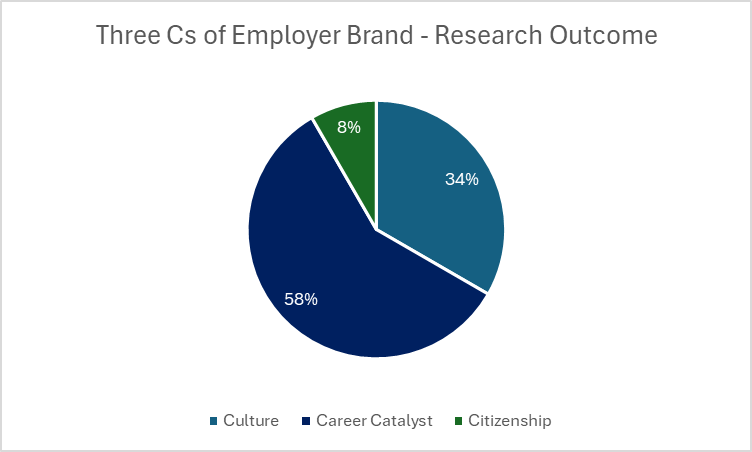
Three Cs of Employer Brand - MSc Research Outcome
Access the article with my research included here
Belonging and risk of groupthink
While belonging can strengthen engagement and commitment, there is also potential tension that organisations need to be aware of.
In some environments, belonging can unintentionally drift towards conformity, where individuals feel pressure to align with dominant views to fit in. When this happens, the desire to belong may begin to outweigh the willingness to challenge ideas or express alternative perspectives.
This dynamic is reflected in the Attraction-Selection-Attrition (ASA) model, introduced by Benjamin Scheider in 1987. The model suggests that individuals are naturally attracted to the organisations whose values and culture resonate with their own. Over time, organisations tend to select and retain people who fit those characteristics, while those who don't feel aligned often leave.
One potential consequence is groupthink, a phenomenon explored by Irving Jarvis in 1971. This is said to occur when well-intentioned groups prioritise harmony and consensus over individual ideas and perspectives.
Recruitment and selection processes can unintentionally reinforce this pattern. As Caldwell (2018) suggests, organisations have emphasised person-organisation fit during hiring decisions. While alignment can support cohesion, it can also lead to organisations hiring individuals with similar perspectives and backgrounds; thus, hiring patterns are evident.
Belonging as a career catalyst
Belonging becomes a catalyst for different reasons. When people feel like they belong, they often show they are engaged and are happy to be an advocate. However, when belonging is absent, it can become one of the signals that encourages people to explore alternative opportunities.
In this way, belonging influences both retention and attrition. The question for Employer Brand and Talent Attraction Leaders:
What signals are you sending about belonging, and does your organisation welcome different perspectives?